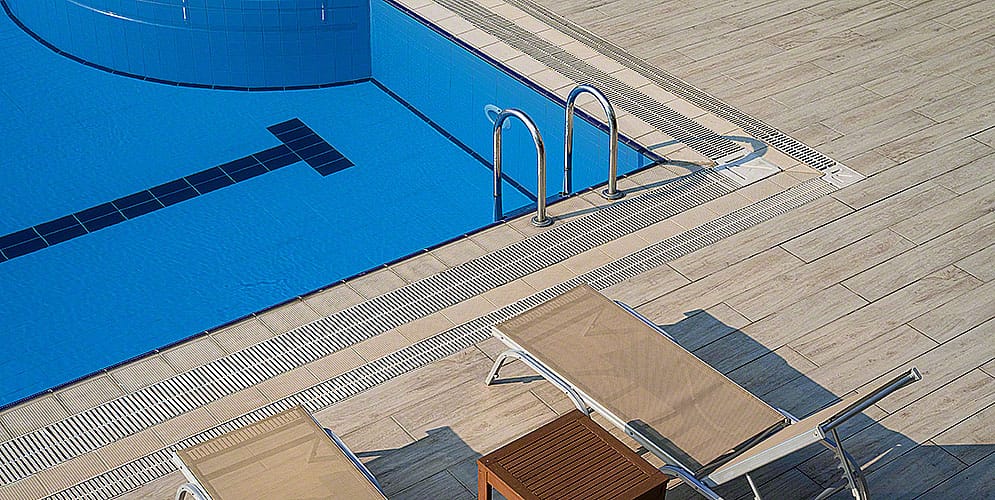
When you choose to build a concrete pool, among many things, like the size and design of the pool, you also have to choose the right finish. It directly impacts the appearance, durability, and maintenance of the pool, so get help from a pool contractor and know about these common types to pick the right one.
Types Of Concrete Pool Finishes
1. Plaster Finish
Plaster is the traditional and oldest concrete pool finish that is still popular due to its cost-effectiveness. It’s essentially white cement and fine aggregates mixed with water. The standard plaster finish color is white, but you can choose other shades as well. Here are some plaster colors and their appearance with pool water:
- White: Sky blue pool water
- Light gray: Soft blue
- Medium gray: Deep blue
- Dark gray: Blue-green or deep blue
- Black: Dark blue
- Beige: Turquoise
Plaster is applied to the pool’s interior like you apply cement. So, at the end, there is a slightly textured finish due to troweling. However, it’s quite smooth compared to other types of plaster finishes, such as aggregate finishes (pebble, quartz, etc.)
Pros of A Standard Plaster Finish
- A plaster finish is a classic and traditional option.
- It costs the least compared to other concrete pool interior finishes. Keep in mind that paint costs even less than plaster, but it’s not considered a genuine pool finish, rather a coating.
- There are a good number of color options, even though the standard white color is quite popular and is much less maintenance than colored plaster.
- The surface is slightly textured, but still very smooth.
- Easy to repair and fix because there is no textured quartz or pebbles involved.
Cons Of A Standard Plaster Finish
- Algae growth is a problem, so you have to clean the surface every week and also consider acid washing every 3-5 years.
- Plaster finish is the least durable finish as it lasts only 5-10 years.
- If you choose any plaster color other than white, it can fade over time and last for 5-8 years, so you may have to resurface the pool sooner than a white plaster pool. But if the plaster is sound and you want to improve the color only, you can paint over the plaster finish.
- The surface is quite smooth to the touch when newly applied, but can become slightly rough over time.
- Prone to etching, scaling, and staining due to water chemistry problems.
2. Aggregate Finishes
Aggregate finish is an upgraded version of a plaster finish because when you add any type of aggregate, like quartz or pebble, in place of sand or fine aggregate in plaster, you get the aggregate finish. This is a huge one because it has many types of its own and each type has hundreds of variations. Remember that most finishes need 28 days for curing. This can impact your pool building timeline.
Let’s discuss the types of aggregate finishes for concrete pools:
A. Quartz Aggregate Finishes
You blend crushed quartz stone with white plaster to make the finish more durable and appealing. Because of a decent range of quartz crystal colors, you can achieve a colored appearance without the problems of colored plaster. Moreover, the quartz aggregate finish is slightly glossy, which can make the pool shinier under the sun.
Pros Of Quartz Aggregate Finishes
- More durable than standard plaster and colored plaster. Can last for 10-15 years.
- It costs 30% to 50% more than plaster, but it’s still cheaper compared to other aggregate options and tiles.
- The addition of quartz doesn’t only improve the appearance, but it can also resist etching and staining from acidic water.
Cons Of Quartz Aggregate Finishes
- Quartz aggregate finish is more textured than plaster, but is smoother in comparison to other aggregate finishes, except polished aggregates. It’s still a common complaint that it feels like fine sandpaper.
- Moreover, the surface can become rougher over time as the plaster from the top layer wears away, exposing edgy quartz crystals. Consider acid washing the pool at that point or replaster it if the finish is older than 12 years.
- Etching is still a concern, even though quartz performs much better against water chemistry problems than standard plaster.
- Not recommended due to the rough texture if you have children or pets who will use the pools.
B. Pebble Aggregate Finishes
These finishes use round river pebbles mixed with white cement. They are recognized easily due to the exposed pebbles you can see on the pool’s walls. Even though round and smooth pebbles are used, as they are exposed, they are textured and may be uncomfortable for some.
If you have rustic patio, a pebble pool finish pairs well with it. For building a pool deck or an individual patio of any style, consult patio contractors Long Island.
Pros Of Pebble Aggregate Finishes
- A pebble pool finish is very long lasting, more than standard plaster, quartz aggregate, glass bead aggregate, and marble aggregate. It can last for 15-25 years.
- The finish is durable and can withstand acidic water and other chemicals much better than other aggregate options. One of the reasons is that you’re using natural river pebbles, which are used to water and various chemicals.
- The visibly-textured surface offers good traction, so there is low or no risk of slipping.
Cons Of Pebble Aggregate Finishes
- The rough texture reduces tripping hazards, but it can be abrasive to the touch. Due to this, many people prefer mini pebble aggregate finishes. They use smaller, round pebbles, which are smoother than standard pebbles.
- It costs more than quartz aggregate finishes and less than glass bead finishes. Some may consider this an advantage, as pebble finishes are the most durable option, yet they are cost-effective compared to glass aggregate finishes that are less durable.
- It requires professional installation.
- Repairs are hard and still not seamless, as matching the original pebble colors and distribution can be difficult.
C. Glass Aggregate Finishes
Glass bead finishes are made by mixing small, polished glass aggregates with white cement. After the application, the surface is polished for a smooth yet exposed glass finish. This finish is known for its appearance, though it’s durable as well. But because of the sparkling aesthetics, this finish costs the most and is considered high-end.
Pros Of Glass Bead Aggregate Finishes
- Offer shine and sparkle, especially under the sun or bright lights.
- The finish can last for 10-15 years.
- Smooth surface compared to other aggregate finishes.
- Glass aggregate finishes are also durable and fare well against chemicals in the pool water.
- As glass is non-porous, there is a minimum risk of stains or algae growth.
Cons Of Glass Bead Finishes
- They cost the most among common aggregate finishes for concrete pools.
- Professional installation is required.
D. Polished Aggregate Finishes
You can choose any of the above aggregate finishes with a polished finish. This retains the benefits of the chosen aggregate finish, but it makes the surface smoother.
3. Tile Finishes
Tile finishes are luxurious, appealing, and long-lasting –and also costly. You can choose from ceramic, porcelain, glass, or any natural stone tiles. There is a huge variety in every type of tile material, especially ceramic and porcelain.
Pros of Tile Finishes
- They are the most durable concrete pool finish option. Porcelain and glass tiles can last for 30-40 years. Natural stone tiles can stay in shape for 10-30 years, while ceramic tiles can last for 10-20 years.
- The non-porous finish of tiles (barring natural stone tiles) resists stains, etching, algae growth, and discoloration.
- There is a huge variety of tile colors, patterns, and textures.
- They offer a premium appearance and you can even mix various types of tile materials, colors, patterns, or textures for the desired look.
Cons Of Tile Finishes
- They are the costliest pool finish options. Among tile finishes, glass tiles are the most expensive.
- Tiles can get chipped or cracked on impact, especially glass and ceramic tiles.
- Natural stone tiles are high maintenance as they are porous.
- Some finishes can have their disadvantages, such as polished finishes, which can be slippery when wet. But there are many textured and anti-slip finishes available.
Conclusion
Although there are only three major types of concrete pool interior finishes, they have their sub-types, and those have so much variety that it can become overwhelming. So, read this guide and consult a pool builder Long Island for advice.

